
A Practical Guide to Building a Creator Portfolio That Gets You Noticed
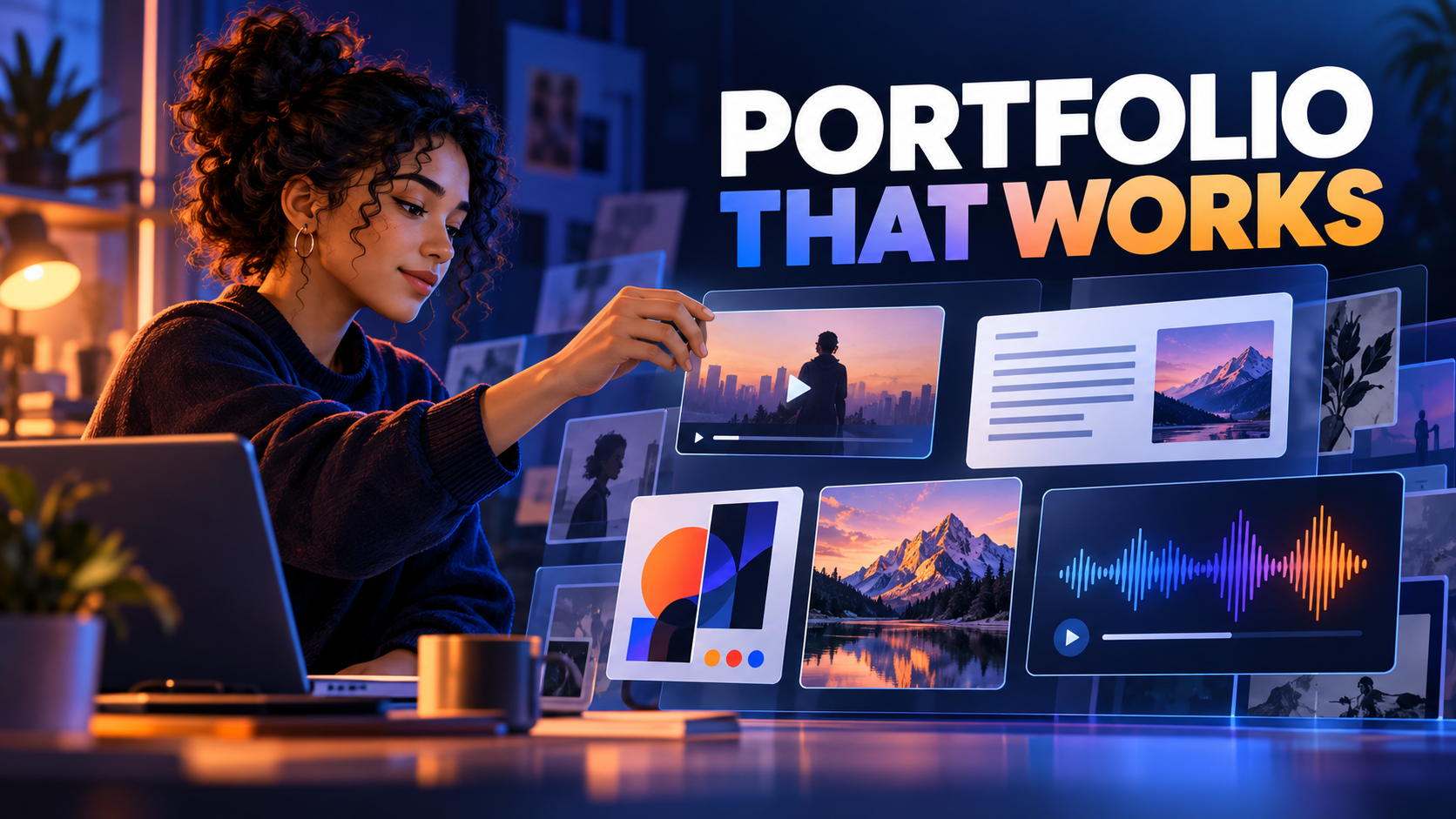
A creator portfolio has one job: help another person understand what you can do and whether you may be a good fit for a real opportunity.
It is not a storage folder for everything you have ever made. It is a selected, organised and honest presentation of your strongest relevant work. Whether you are an actor, writer, filmmaker, designer, musician, photographer, editor or creative technologist, a focused portfolio can make your capability easier to evaluate.
START WITH THE OPPORTUNITY YOU WANT
Before choosing your work samples, decide who should view the portfolio and what you want them to consider you for. An actor seeking screen roles needs different evidence from an editor seeking short-form brand projects. A writer applying for a dialogue assignment needs different samples from someone pitching a feature screenplay.
Write a one-sentence goal. For example: “This portfolio should help independent production teams evaluate me for assistant-direction work.” That sentence becomes your editing rule. If an item does not support the goal, it probably does not belong in the main portfolio.
MAKE YOUR ROLE CLEAR
Creative work is often collaborative. Never imply that you created an entire project when you handled only one part of it. For every sample, state the project type, the brief or objective, your exact role, the tools or process used and the final deliverable.
Honest attribution protects your reputation. It also shows that you understand professional collaboration.
SHOW FEWER, STRONGER EXAMPLES
A small collection of relevant work is often clearer than a long, unfocused archive. Lead with the work that best matches the opportunity you want. Remove duplicate samples, unfinished exercises that add little value and anything you do not have permission to display.
If you lack professional credits, create purposeful demonstration projects. Redesign a fictional campaign, edit a short sequence from footage you are authorised to use, record a clean monologue, write a sample scene or document a self-initiated creative challenge. Label conceptual work clearly.
EXPLAIN THE THINKING BEHIND THE WORK
A polished image or video shows output, but a short case note shows judgment. Use a simple structure:
• The need: What problem or brief did the project address?
• Your contribution: What exactly did you do?
• The process: What important choices did you make?
• The outcome: What was completed or learned?
Do not invent performance numbers or client praise. If the project has no measured result, describe the deliverable and what it demonstrates.
DESIGN FOR QUICK REVIEW
People reviewing creators may be looking at many profiles. Make yours easy to scan. Start with your name, location if relevant, professional focus, strongest capability and preferred type of work. Use clear titles, readable text and direct links.
For video or audio work, label duration and your role. For writing, include short excerpts and a downloadable or readable full sample where appropriate. For visual work, use high-quality previews that load efficiently. Test every link on mobile.
ADD TRUST SIGNALS WITHOUT EXAGGERATION
Useful trust signals include completed-project credits, verified collaborators, permission-based testimonials, consistent contact information and evidence that you meet deadlines or follow briefs. Certificates may support a profile, but they should not replace actual work.
Avoid vague claims such as “world-class,” “award-winning” or “industry-leading” unless you can prove them. Specific evidence is more persuasive than large adjectives.
KEEP PRIVATE AND SENSITIVE MATERIAL OUT
Do not publish confidential scripts, unreleased footage, private client information, identity documents or materials covered by a non-disclosure agreement. Ask before using collaborative work. Credit people properly and use only images, music and footage you own or are authorised to display.
MAKE THE NEXT STEP OBVIOUS
End the portfolio with one simple action. Tell the viewer what opportunities you are available for and how to contact or connect with you. Do not create five competing calls to action.
A useful closing line could be: “Available for short-form editing and independent film collaborations. Send a clear brief with the project type, expected deliverable and timeline.”
UPDATE IT THROUGH COMPLETED WORK
Review your portfolio regularly. Replace weaker pieces with better evidence. Add context to new work. Correct broken links. Remove outdated claims. Your portfolio should evolve as your capability and direction become clearer.
FROM DISPLAY TO PARTICIPATION
A portfolio becomes more valuable when it connects to real participation. Roshopion’s HumanTech™ direction links human capability with real needs: I CAN meets I NEED, participation becomes I DID, and completed work can strengthen future opportunity.
Build your portfolio as proof, not decoration. Make it focused, honest and useful. The aim is not simply to be noticed—it is to help the right collaborator understand how you can contribute.
 Russian
 English
 Arabic
 French
 Spanish
 Portuguese
 Deutsch
 Turkish
 Dutch
Dutch
 Italiano
 Romaian
 Portuguese (Brazil)
 Greek
Greek