
How to Write a Creator Bio: A Clear Introduction Without Big Claims
You open a profile page and reach the introduction box. Suddenly, describing yourself feels harder than making something.
Should you call yourself a filmmaker if you have only made practice videos? Should you mention every interest? What can you say when you have no awards, clients, or professional credits?
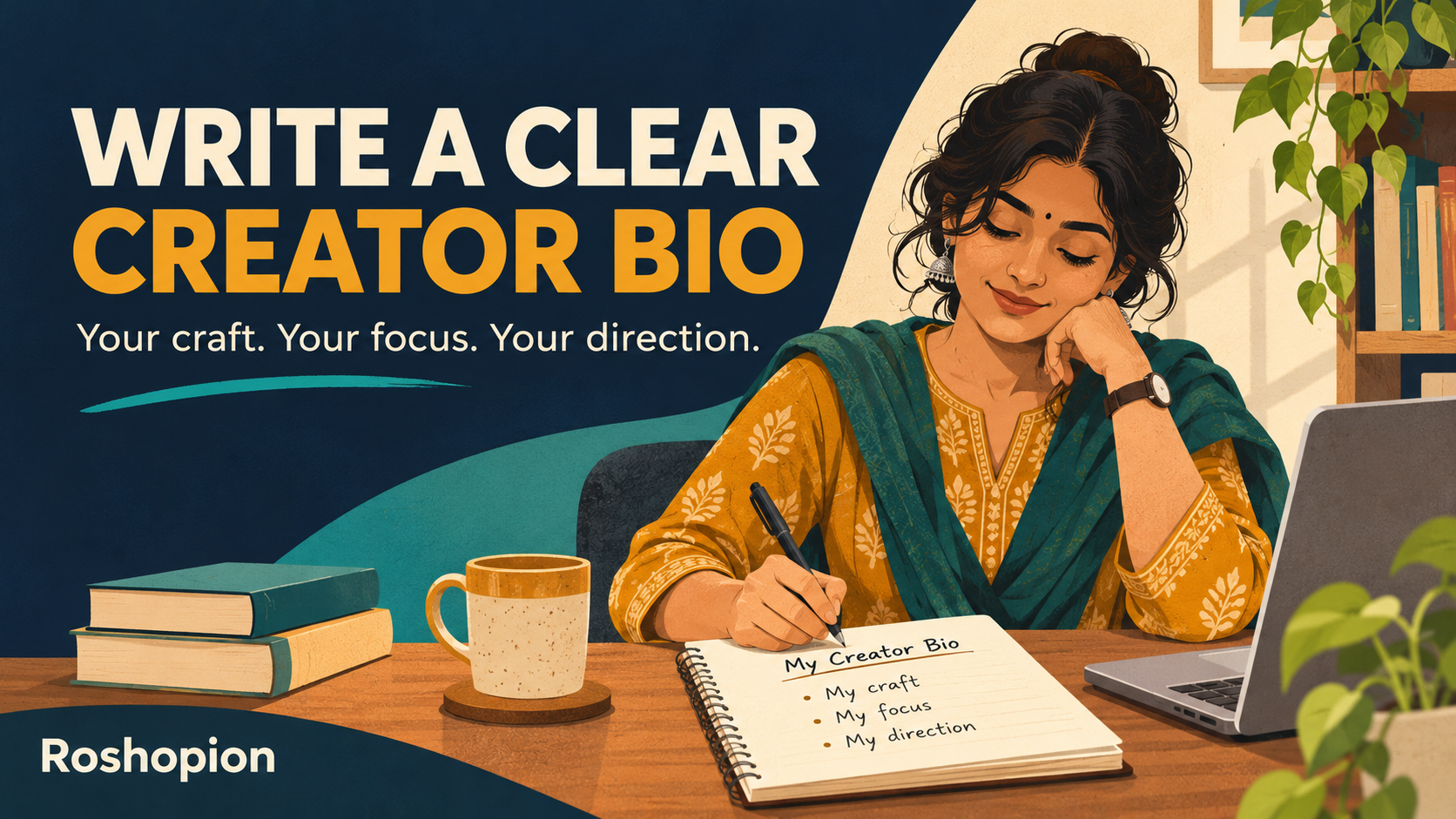
Learning how to write a creator bio starts with describing your current work accurately. Give another person enough information to understand your craft, the subjects that interest you, and what you are developing next.
You can write a useful introduction before you have a long career history. Here is a practical structure, with examples you can adapt to your own experience.
Decide Where the Bio Will Appear
Start with the destination. A short profile introduction, an article author note, and a project page may need different amounts of detail.
Check the space available before writing. If a platform provides a character limit, use that actual limit rather than guessing.
For a general introduction, aim to answer three questions: What do you create? What interests you? What are you working on or learning?
An author note may also explain why you are writing about a subject. A project introduction should focus on your role in that project. Choose the details that help the person reading this particular page.
Name Your Craft in Plain Language
Begin with an activity someone can picture.
“I write short scenes about family relationships” communicates more than “I am a passionate creative visionary.” The first sentence gives a reader a subject and a form.
You can describe your stage of development without diminishing your effort. Try “I’m learning smartphone filmmaking through short visual exercises” if that reflects what you do.
Avoid collecting titles simply because you hope to explore them eventually. If you currently write and perform, those activities may be enough for a first introduction.
Choose words you would feel comfortable explaining in a conversation.
Add a Specific Interest
Your craft tells a reader what you make. Your interests help them understand your direction.
A photographer might explore everyday routines. A writer might enjoy dialogue between people of different generations. A designer might focus on making instructions easier to follow.
Specificity does not require an unusual identity or dramatic personal story. It can come from something you notice repeatedly.
Try completing this sentence: “I am especially interested in…”
Choose one or two interests that connect with work you are actually making or studying. You can change them as your practice develops.
Include Evidence You Can Explain
If you mention a project, credit, award, qualification, or result, make sure it is accurate.
For a beginner, the evidence may be a self-initiated exercise: “I’m developing a series of short observational videos filmed on my phone.”
That sentence describes activity. It does not suggest that the series has been commissioned, widely watched, or professionally endorsed.
If you helped on a group project, name your contribution precisely. “Recorded sound for a student short film” is clearer than implying you directed the production.
You do not need to fill every introduction with achievements. A truthful description of your practice can be useful on its own.
Use a Simple Three-Part Structure
Build a first draft from three elements:
- Craft: What you make or practice.
- Focus: The subjects, people, or problems that interest you.
- Current direction: What you are developing now.
Here is a fictional example:
I’m an emerging filmmaker exploring everyday stories through smartphone video. I’m interested in how small gestures reveal relationships. I’m currently practicing short scenes in single locations.
Another fictional example:
I write short fiction about family conversations and changing expectations. My current practice focuses on dialogue and endings. I’m developing a small collection of self-initiated scenes.
These examples are demonstrations, not real participant biographies. Replace every detail with something true about you.
Write a Shorter Version
Once the meaning is clear, create a compact alternative for smaller spaces.
The fictional filmmaker introduction could become:
Emerging filmmaker exploring everyday relationships through short smartphone scenes.
The shorter version keeps the craft, interest, and format. It leaves the practice detail for a longer introduction.
Read both versions aloud. Remove repeated ideas and words you would not normally use. If a sentence needs a long explanation, try stating the activity more directly.
Keep the longer draft in your notes so you can adapt it when a different destination gives you more room.
Make Invitations Specific and Accurate
A bio can include a next step when you have a real reason to invite one.
For example: “I enjoy discussing visual storytelling with other beginners.” That is different from suggesting that you are running a funded production or recruiting a team.
Only say you are available for commissions, accepting submissions, or seeking collaborators when you have decided what that means and can respond appropriately.
You can also leave the invitation out. A clear introduction does not need to promise an opportunity.
If you include a contact route, choose one you are comfortable making public. Keep private information out of the bio.
Check Your Draft With a Reader
Show the introduction to someone willing to read it. Ask them to describe what you create and what interests you.
If they cannot answer, examine the wording. You may have included too many interests, used broad labels, or buried your main activity.
Ask whether any sentence suggests an achievement or role beyond what you intended. Revise the description if it creates a misleading impression.
Save the final text with a date. Revisit it when your work changes, rather than leaving an old “currently working on” statement in place indefinitely.
Connect Your Introduction With Human Development
Roshopion’s HumanTech™ mission centers people, development, cooperation, and accessible participation. A clear introduction gives others a starting point for understanding your creative direction without requiring inflated claims.
THE ROSHOPIONS™, The Open Human Incubation Show, is Roshopion’s flagship show vision. Its guiding line—Discover. Develop. Create. Become.—also offers a way to reflect on your introduction.
Discover what interests you. Develop language that describes it. Create work that gives the description substance. Update your introduction as you grow.
For a practical next step, read how to build a creator portfolio with one small project.
This writing exercise is independent practice. It is not an application or promise of selection or work.
How would you introduce your creative practice in one honest sentence? Share it in the comments, leaving out private contact details.