How to Ask for Creative Feedback: 5 Questions for Your Next Draft

You finish a short video, a scene, or a design and send it to someone you trust. Your message says: “What do you think?”
The reply arrives: “Looks good!” You appreciate the encouragement, but you still do not know whether the opening is clear, the example makes sense, or the ending needs work.
Learning how to ask for creative feedback starts with giving your reviewer a manageable task. Tell them what you are making, who it is for, and which decision you need help with. Then ask a question they can answer from the work in front of them.
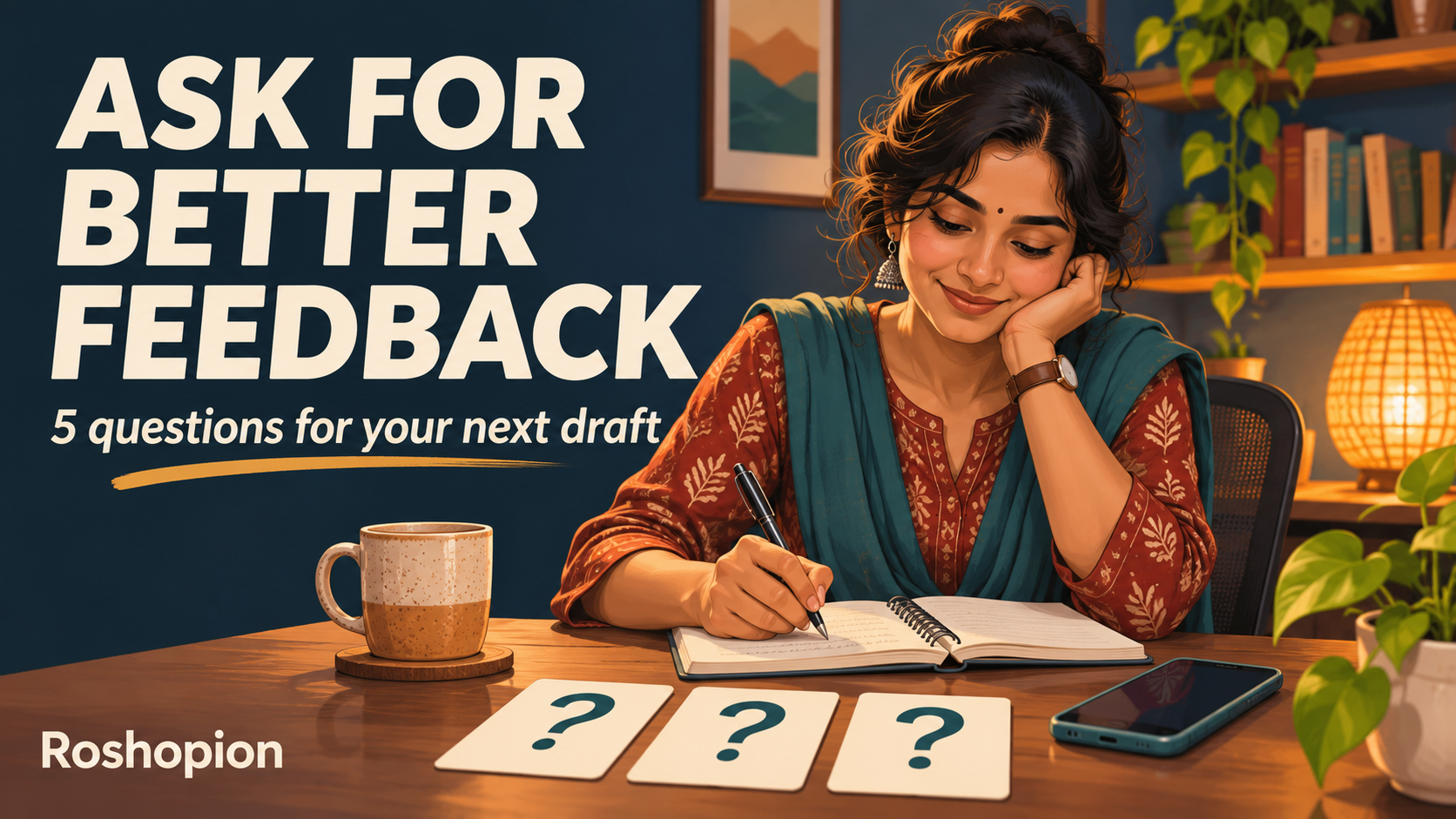
Here are five questions you can adapt to a script, video, design, performance, or first portfolio project.
Before You Ask: Explain the Brief
Introduce the work in two sentences. Describe the audience and purpose, then explain its stage of development.
For example: “This is a first draft of a 30-second video for beginner creators. I want viewers to understand how to choose one skill for a portfolio exercise.”
That context helps someone assess whether your choices serve your purpose. A rough draft needs a different conversation from a finished piece awaiting a final spelling check.
Ask whether the person has time to review it. A small, specific request respects their attention. You can use all five questions over a project, but start with one or two rather than sending a long questionnaire.
1. What Did You Understand the Main Idea to Be?
This question lets you compare your intention with a viewer’s interpretation.
Avoid explaining the whole message before they answer. If you tell them exactly what every moment means, you may miss where the work needs to communicate more clearly on its own.
For a story, adapt the question: “What did you think the character wanted?” For a poster, ask: “What activity did you think this was inviting you to?”
Listen for the words they use. If their answer differs from your intention, ask which part led them there. That gives you a place to examine.
2. Where Did You Need More Explanation?
Ask the reviewer to identify a sentence, shot, paragraph, or instruction. A specific location gives you a practical starting point for revision.
For example, a viewer might understand your advice to “write a project brief” but need an example of what that brief contains. Adding a short demonstration could help.
This does not mean every uncertainty requires more content. Sometimes a simpler sentence or a different order is enough. First identify what is unclear, then choose a proportionate change.
3. Which Moment Held Your Attention, and Why?
Feedback should help you recognize useful choices as well as problems. Ask for a moment the reviewer remembers.
They might mention a clear example, a natural delivery, a revealing line of dialogue, or a visual that explained something quickly.
Follow up with “What about that moment worked for you?” A specific answer can tell you which element to preserve while revising the rest.
Keep the response in perspective. One person’s preference is one observation. Look at it alongside your brief and your own judgment.
4. What Could I Remove Without Losing the Meaning?
Creators often know the background behind every decision. An audience may need less of that background than you expect.
Ask your reviewer to identify a repeated point, a long introduction, or a detail that distracts from the central idea.
For a hypothetical presentation exercise, you might spend fifteen seconds introducing yourself before demonstrating the skill. A reviewer could suggest starting with the demonstration and adding a shorter introduction afterward.
Try a second version before deleting your original. Comparing both versions helps you decide whether the cut improves clarity or removes something important.
5. If I Changed One Thing First, What Should It Be?
A review can produce more suggestions than you can use in one session. This question asks the reviewer to prioritize.
Their answer might be clearer sound, an earlier example, a more readable heading, or a stronger connection between two scenes.
Ask how that change would help the intended audience. Then choose your next action. You remain responsible for the creative decision; asking for feedback does not require accepting every proposed solution.
A Feedback Request You Can Adapt
Hi! Would you have five minutes to look at this draft?
It is a [format] for [audience], intended to [purpose]. This is an early version, and I am currently working on [one area].
Could you tell me what you understood the main idea to be and where you needed more explanation? A specific sentence or moment would help.
Please keep the draft private. No problem if you do not have time—thank you for considering it.
Replace the brackets with accurate details. Share only material you have permission to share, and agree on privacy before sending unpublished collaborative work.
Turn the Response Into One Revision
Make three notes after the review: what the person observed, what you intend to change, and why that change serves the brief.
For example: “The viewer understood the topic but could not picture the exercise. I will add one handwritten sample brief after the opening.”
Record the revision with your phone or update the draft using tools you already have. Keep both versions and compare them. No paid equipment is required for this practice.
For the other side of the conversation, read how to give creative feedback that helps someone improve. If you need a starting piece, try building a creator portfolio with one small project.
Practice Cooperation Through HumanTech™
Roshopion’s HumanTech™ mission centers people, accessible participation, development, and cooperation. A thoughtful feedback exchange gives those values a practical form: one person makes something, another pays attention, and the creator chooses a next step.
THE ROSHOPIONS™, The Open Human Incubation Show, is Roshopion’s flagship show vision. Discover. Develop. Create. Become. can also guide independent practice: discover what your draft communicates, develop one part, and create another version.
This exercise is independent creative practice, not an application or promise of selection or work.
Which of these five questions would you ask about your next draft? Share the question and your creative field in the comments.